
Program Track • Coordination
Family Support Coordination
Collaborative navigation and resource management providing households with clear administrative and operational backing.
Structured instructional modules and guided workshop practice designed to foster fine-motor dexterity, practical craftsmanship, and personal autonomy.
Individual skill development serves as the foundation for sustainable civic participation and domestic self-reliance. Grounded in systematic instructional tracks, this program matches personal curiosity with hands-on practice across tactile crafts, assembly tasks, and functional life techniques. Participants work in dedicated community studio environments where experienced instructors break down intricate handcraft tasks into manageable, progressive routines that build focus and dexterity.
Rather than enforcing generic mass exercises, our coaches work alongside each individual to determine meaningful personal targets. Every milestone is observed, documented, and celebrated—from the initial handling of specialized hand tools to the final assembly of complex utility goods. The sense of achievement cultivated at the workbench extends naturally to daily living, personal decision-making, and proactive community engagement.
Direct admissions and tailored skill pathway evaluations are available for local residents seeking specialized coaching.
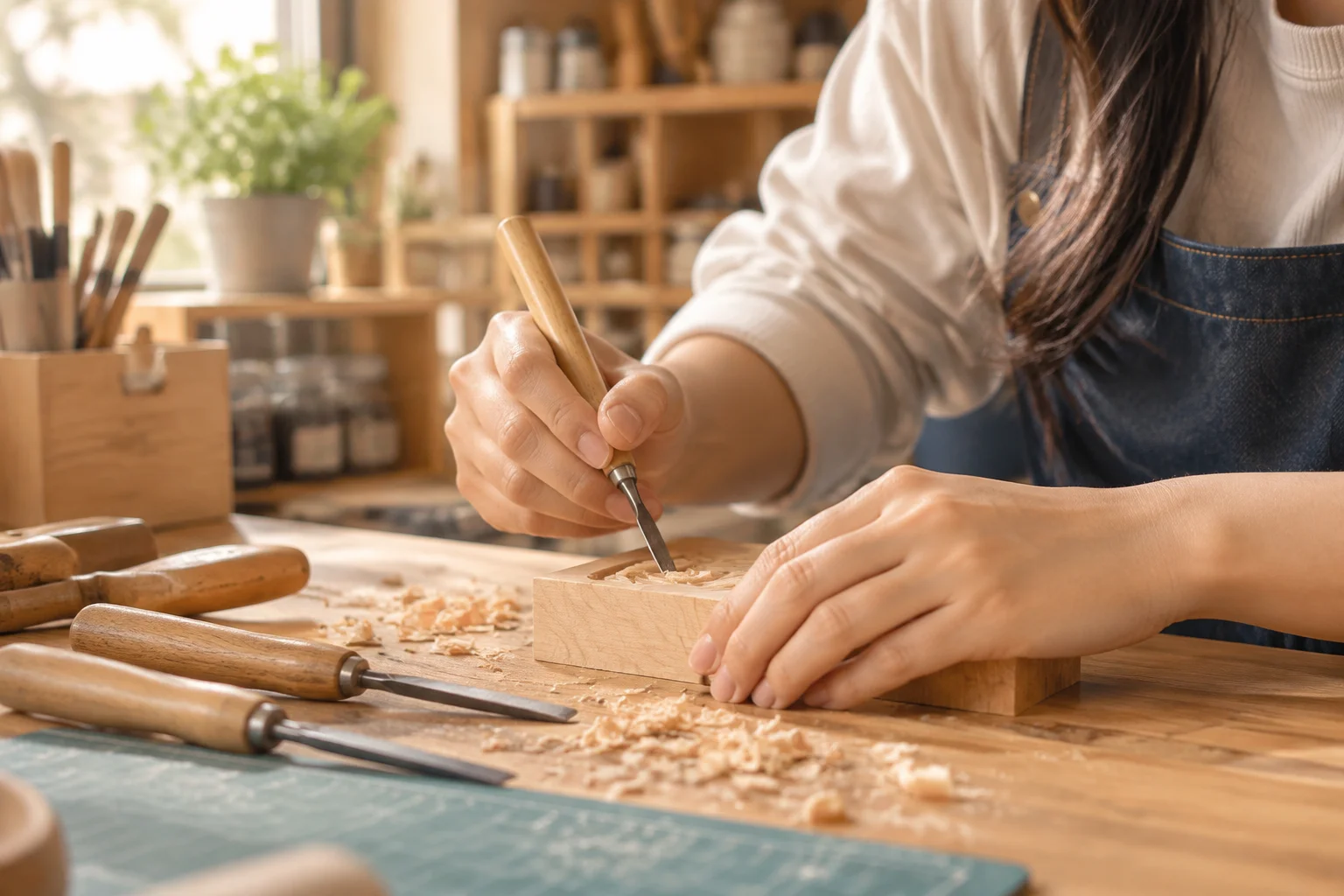
Our sequential curriculum develops functional independence systematically, progressing from foundational tactile safety to autonomous project execution.
The primary tier focuses on establishing dependable workplace habits, workspace hygiene, and safe handling of hand tools and creative materials. Participants build steady motor patterns through repetitive, low-stress handling drills and learn to organize their personal workstation systematically before and after each exercise.
Longitudinal evaluations across our participant cohorts demonstrate notable gains in vocational readiness, sustained attentiveness, and self-efficacy. By engaging directly with tactile mediums—woodworking, ceramics, bookbinding, and technical assembling—participants establish verifiable capabilities that enrich both their home environments and neighborhood civic circles.
The secondary benefit lies in reinforced social networks. Learning beside peers in a shared workshop normalizes collaborative dialogue, constructive peer critique, and mutual celebration of accomplished milestones. Graduates often transition into community volunteering initiatives and local craft guilds with sustained self-confidence.
Public Registry Annotation: Curriculum metrics and observational criteria are updated annually in alignment with state community habilitation standards and vocational education quality guidelines. Records for the 2026 academic cycle are cataloged under standard non-profit educational documentation.
Collaborative navigation and resource management providing households with clear administrative and operational backing.
Interactive classroom modules dedicated to neighborhood navigation, civic interaction, and social inclusion standards.
One-on-one experiential guidance connecting developing participants with trusted experienced neighborhood peers.